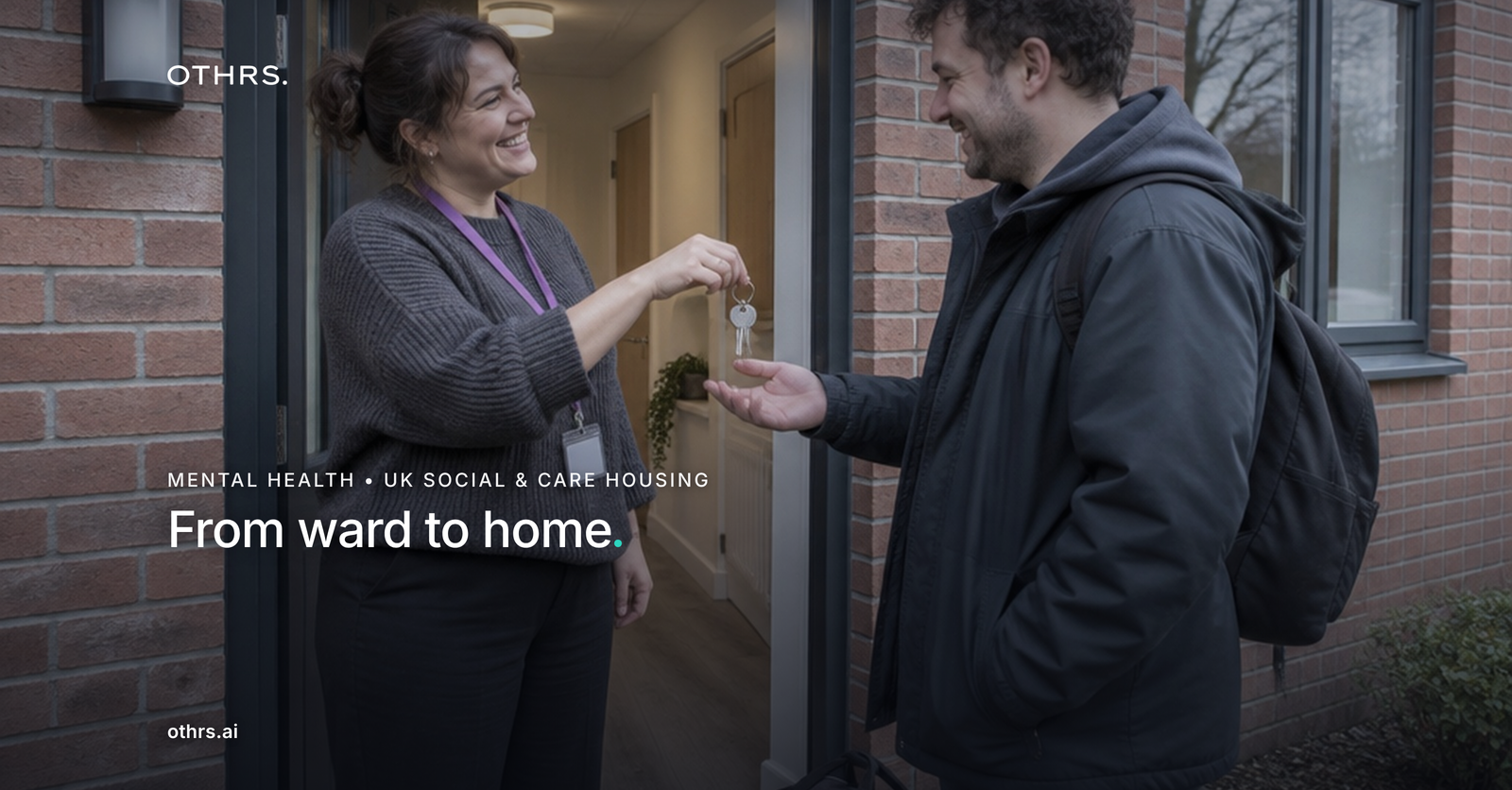

Supported housing sits exactly where 2 public systems meet, and neither fully owns it. Councils are responsible for adult social care, and for housing through the housing authority. The NHS carries the cost when someone cannot leave a hospital bed or a specialist unit because there is nowhere suitable to go. Each system plans on its own timetable, with its own budget, and the person who needs a home falls between them.
For providers and developers, understanding who plans what is not academic. It tells you who to talk to, what evidence they need, and why a sound scheme can still wait for a decision that nobody owns.
The council side
Under section 5 of the Care Act 2014, a local authority must promote the efficient and effective operation of a market in services for meeting care and support needs, so people can choose from a variety of high quality services. That includes monitoring demand and encouraging innovation. In practice it means the council should know what supported housing its area needs and should signal that to providers and developers.
The NHS side
Integrated care boards (ICBs) were established under the Health and Care Act 2022 and took over from clinical commissioning groups on 1 July 2022. They plan and fund most NHS services for their area, working with partner NHS trusts. The structure is changing: in November 2025 the government announced a 50% cut in ICB headcount, a move to a more strategic commissioning role, and the return of NHS England into the Department of Health and Social Care within 2 years. Check the current boundaries and contacts for the area you work in before you approach anyone.
Where they have to plan together
- Joint local health and wellbeing strategies. Under section 116A of the Local Government and Public Involvement in Health Act 2007, the local authority and its partner ICBs prepare a joint local health and wellbeing strategy for the area.
- The Better Care Fund. This pooled fund helps councils and ICBs deliver more integrated care. The 2026 to 2027 framework, published on 17 February 2026, totals £9,154m, made up of an NHS minimum contribution, the council Local Authority Better Care Grant and the Disabled Facilities Grant. Housing, social care and NHS teams are encouraged to plan the Disabled Facilities Grant jointly.
- Specialised supported housing. The Local Government Association and NHS guidance describes housing designed or adapted for people who need specialised support, provided by a registered provider under an agreement with a council or NHS body.
Why the gap is expensive
The 2022 government action plan Building the Right Support, for autistic people and people with a learning disability, noted that some people who are ready to leave hospital cannot return to their community, often because of difficulties in finding somewhere suitable to live. More recently, a report by the Royal College of Psychiatrists, Look Ahead and the National Housing Federation, published in April 2026, estimated that delayed discharges due to housing in mental health services cost the NHS around £102m in 2024 to 2025. That is sector research, not an official figure, but it shows why health partners care about housing supply.
How to make a scheme easier to commission
- Find the right door. Identify the council commissioner and the ICB lead for the client group, such as learning disability, mental health or older people.
- Bring evidence of need. Cite the council's own published strategies and your local referral data, not general national statements.
- Show the funding route. State who is expected to pay for rent and who for support, and where a joint arrangement is assumed.
- Be specific about who will live there. Say which needs the scheme meets and which it does not.
- Make the scheme easy to check. Provide registration, regulatory and property information in one place.
How OTHRS helps
OTHRS is being built so that local authorities can publish the demand they have, and so that providers, housing providers and developers can see it alongside verified organisations and opportunities. The aim is a shared view of need and supply that commissioners from both systems can work from, with every match showing its reasoning and every conversation recorded in a Deal Room. It does not make commissioning decisions. It makes the evidence easier to find and compare.
Frequently asked questions
Who commissions supported housing in England?
Mainly local authorities, with NHS bodies involved where health needs are significant. Housing and care are usually funded separately.
What does the Care Act say about the market?
Section 5 requires councils to promote an efficient and effective market in care and support services, including keeping track of current and future demand.
What is the Better Care Fund?
A pooled fund that helps councils and ICBs deliver more integrated care. It includes the Disabled Facilities Grant.
Are integrated care boards changing?
Yes. The government announced significant reductions and mergers in November 2025, so check the current structure locally.
How can a provider show demand to a commissioner?
Use the council's published strategy, referral numbers and a clear description of who the scheme is for.
See published demand alongside verified providers. Sign up at othrs.ai.
Sources
- Care Act 2014, section 5
- Health and Care Act 2022, section 19
- Local Government and Public Involvement in Health Act 2007, section 116A
- Better Care Fund framework 2026 to 2027
- Government announcement on NHS reform, 11 November 2025
- Building the Right Support Action Plan (2022)
- LGA and NHS specialised supported housing guidance
- Royal College of Psychiatrists report summary, 28 April 2026